
One of the hallmarks of modernist works is the search for harmony and beauty in each of its elements. Although they were elements of daily use such as door handles or knockers, even domestic furniture objects such as chairs or tables, all of this was conceptualized under modernist principles and reflected a great predilection for the curved line of naturalist influence. But not only the decoration was important, but also the functionality of all its elements and the incorporation of the latest construction innovations. Among these novelties, modernist architects found the arrival of the electric elevator whose use became popular from 1903.
An invention that arose in the United States in the 19th century due to the need to build taller buildings, but whose precedent dates back to the great constructions of antiquity and the crane system used to move materials through human energy. , animal or by the current of the water.
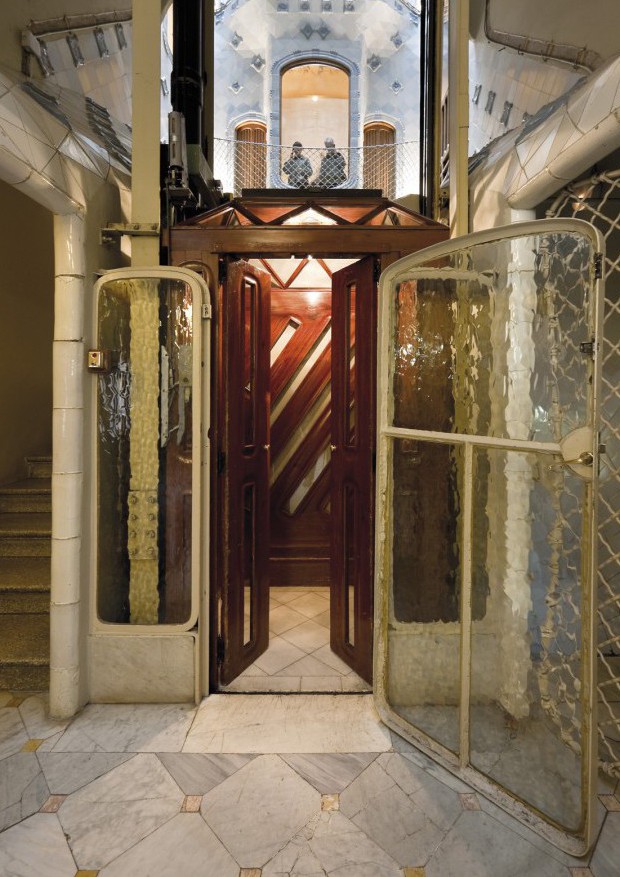
In Barcelona, according to historical sources, the first elevator was installed in the Columbus Monument on the occasion of the Universal Exposition of 1888. In 1904 Gaudí already designed an elevator for Casa Batlló, whose cabin remains original, but the motor is modern for adapt to current safety standards. Also in Barcelona, the 1906 Casa Milà stands out, also designed by Gaudí, and the one located in the Ateneo Barcelonés, designed the same year by the modernist architect Josep Maria Jujol, Gaudí’s personal and most trusted collaborator who, in addition to from participating in the façade, decoration and furniture of Casa Batlló, he became responsible for the works of Casa Milà.
The two examples by Gaudí, as well as the one designed by Jujol, are made up of a wooden cabin with a modernist finish and the presence, to a greater or lesser extent, of small colored stained glass windows that play with the natural light present in the interior patios of these buildings.
With the integration of this new invention in modernist architecture, Gaudí and his contemporaries turned a purely functional element into small works of art that, in most cases, go unnoticed.